

 Shop New October Deals


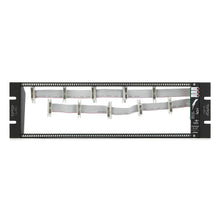
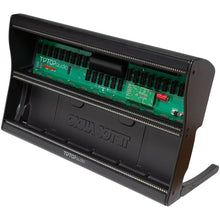


Please note: This item requires a Eurorack/Modular Synth Case for operation. Shop Eurorack Cases.

Experts At Your Service
Have a question? Our Audio Consultants and Technicians have years of real-world experience and are ready to help.
Product Description
The TipTop Audio Buchla 259t Complex Waveform Generator from TipTop Audio id a Eurorack version of the legendary original Complex Oscillator. The 259t is built with collaboratively Buchla U.S.A. to provide all of the colorful timbrality of the original to any Eurorack rig.
OSCILLATORS
There are two oscillators: Modulation and Principal, both oscillators can be manually tuned via CV or Autotuned via ART. The Modulation Oscillator has a fixed Triangle waveform and a toggle selectable Signal output which can be a Triangle, Square or Sawtooth waveshape. It can be switched from LFO (Low-Frequency Oscillator) mode to a high audio-rate oscillator. Additionally, it can be configured to receive incoming 1V/OCT or ART signals. A CV output is also available for the Modulation oscillator.
The Principal Oscillator has three audio outputs: a fixed Sine wave, a fixed Square wave and a Final output which provides infinite complex waveforms via the Timbre and Harmonics sections. The Principal Oscillator runs at audio rate but its frequency range can be driven higher or lower with CV. It can also be switched from 1V/OCT to ART.
Both oscillators have a large Frequency control knob with a range of about 27.5 Hz which is the lowest A0 pitch on a piano up approximately 8 octaves to about 7040 Hz or A8 and octave above the highest A on a piano. The frequency figures surrounding the Frequency knob are approximate, not precise. As mentioned before their frequency ranges can be driven higher or lower with CV. There is also a fine tune knob which covers a range of about an interval of a fifth. Both oscillators have two CV inputs. The one with an attenuverter can add or invert the incoming CV. The one marked Keyboard or ART can toggle to Keyboard mode which use 1V/OCT, or to ART. Both oscillators can receive Audio FM and the amount of FM will be determined with the attenuator.
TIMBRE/HARMONICS
In Timbre/Harmonics section there are 3 wave shapers in that section and the knobs allow us to cross fade between their outputs and the VCO sine wave. The wave shapers are Wave Folder, Sawtooth, and M shape (can be consider as square). The Order knobs cross fade between wave folder and sawtooth and M shape. It is the final cross fade before the output. When the Order is fully CCW the output is the wave folder and in that case the Timbre knob is the folding control and Symmetry adds DC to the audio entering the folder thus altering its folding further to be asymmetric. When Order is fully CW, timbre cross fade between the VCO sine wave and another cross fader of the sawtooth/M shape that is controlled by the Symmetry knob. Yes there are tons of cross fades on this module and they are in series. Since Order and Symmetry don’t have attenuators on their CV input this is good opportunity to use a 257t to process CV before going to these inputs for more subtle control.
MODULATION
The audio input jack has an attenuator pot which phase locks the frequency of this oscillator with the frequency of the input signal. If the frequency of the input signal is close to or lower than that of the oscillator it will cause the oscillator to “lock” onto the frequency of the input signal. If the input has a higher frequency the oscillator will “lock” onto the nearest subharmonic of the input frequency. This can be used to eliminate beating between two oscillators tuned in unison, octaves or harmonics.
In the Modulation section the switches are internal connections from Modulation oscillator to the Principal oscillator FM, Timbre section and Amplitude modulation. The Amplitude switch set to the right has no effect. When switched to the left it will Amplitude Modulate the Principal oscillator with the Modulation oscillator as determined by the Mod Index setting of the attenuverter.
Likewise the Pitch (Frequency Modulation) switch set to the left engages its modulation. Timbre Modulation is unique to this oscillator’s design and modulates the Timbre when set to the left. Experiment with combining these modulation function in conjunction with the Mod Index attenuverter.
PITCH CONTROL WITH ART
The pitch of the 259t oscillators can be controlled manually with 1V/OCT CV or automatically for higher note accuracy using the module's internal Autotune, activated by the ART switch. Please note that when set to ART, the CV FM inputs are disabled, while audio FM and all other inputs remain enabled.
TRIMMERS
There are five trimmers on the 259t. All are factory-set and rarely need to be re-adjusted. TR1 and TR4 set the 1V/OCT tracking of the oscillators: TR1 for the modulator and TR4 for the principal oscillator. Adjusting these trimmers will a ect the 1V/OCT scaling and ART tuning. If you make any adjustments, be sure to perform a new INITIAL TUNING in ART mode. The other three trimmers adjust the principal oscillator's sine wave shape and gain. To readjust, start with TR5, then move to TR2, going back and forth between them. Once the sine wave looks good, adjust the gain using TR3.
Features
Specifications
| Depth | |
|---|---|
| Chassis | |
| Module Slot Count | |
| Module Type | |
| Power Consumption | |
| Synth Module Connectors |